

Research Areas
The four working pillars of topics, interest, and themes we work on as an innovative group that aims at bridging collaborative and interdisicplinary approaches benefiting marginalized communities and towards achieving sustainability
CONSERVATION
What do we focus in conservation?
The ICOLABB Research Group continues to push the boundaries of biodiversity science by blending classical field ecology with emerging technologies, all in the service of conservation in some of the world’s most threatened ecosystems.
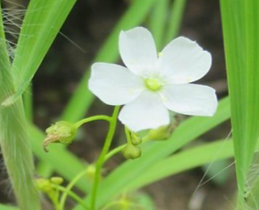
ORGANISMIC SCALE: At the heart of our work is the study of endemic and ecologically significant species across multiple biological scales. In terrestrial vertebrates, we focus on medium to large-sized mammals such as the Mindoro Warty Pig, Tamaraw, Philippine Long-tailed Macaque, and Philippine Deer—species that not only represent unique evolutionary lineages but also serve as indicators of ecosystem health. We extend our lens to pollinator networks, particularly among Lepidoptera, whose sensitivity to environmental change makes them vital bioindicators. In the plant realm, we investigate both economically and ecologically important taxa such as Tectonia and the fascinating diversity of Carnivorous plants that thrive in nutrient-poor environments—living testaments to evolutionary innovation.At the microscopic frontier, ICOLABB explores the hidden diversity of protists, particularly within Amoebozoa (slime molds, and testate amoeba), uncovering their ecological roles and contributions to soil and ecosystem functioning.
METHODOLOGIES: Our approach is grounded in rigorous field-based methodologies: from transect walks and non-invasive sampling to camera trapping, but we also integrate cutting-edge tools such as environmental DNA (eDNA) metabarcoding and drone-assisted habitat mapping. This synthesis allows us to document biodiversity with both depth and precision, even in challenging and understudied terrestrial ecosystem. Much of our work is situated in biodiversity hotspots, where high endemism intersects with intense anthropogenic pressure. These are places where conservation is not just important—it is urgent. By generating robust ecological data and fostering interdisciplinary collaboration, ICOLABB contributes to science-based conservation strategies that aim to protect both species and the ecosystems they sustain.
WANT TO JOIN?: We believe that conservation thrives on collaboration and curiosity. Whether your interest lies in mammals, insects, plants, microbes—or the technologies that help us study them—ICOLABB welcomes opportunities to share ideas, co-develop research, and build meaningful partnerships. If you are passionate about biodiversity conservation in any form, we would be glad to connect and explore possibilities together.



LANDSCAPE ECOLOGY
How do we research Landscape Ecology?


The ICOLABB Research Group continues to expand its work in landscape ecology by linking terrestrial, urban, and coastal systems into a unified framework for sustainability and conservation. Our research focuses on habitat suitability across landscapes—from forests and agroecosystems to wetlands and urban mosaics—while also extending into coastal ecosystems and marine environments, recognizing that these systems are deeply interconnected.
GEOSPATIAL INNOVATIONS: Using Earth observation platforms such as Sentinel satellites and Landsat programs, we conduct land-use and land-cover change analyses powered by machine learning and advanced data analytics. These approaches allow us to generate key environmental indicators like Normalized Difference Vegetation Index, Normalized Difference Built-up Index, Normalized Difference Water Index, and Land Surface Temperature, which collectively reveal vegetation dynamics, urban expansion, hydrological shifts, and thermal patterns across landscapes. We further examine environmental stressors and disturbances, including air quality trends, noise pollution, and fire events, integrating spatial tools such as Geographic Information System, Global Positioning System, and ecosystem modeling platforms like InVEST. These enable us to quantify habitat quality, fragmentation, and ecosystem service flows across both natural and human-dominated systems.
MORE THAN JUST THE TRADITIONAL: A key dimension of our research lies in urban landscape ecology, where we analyze complex spatial dynamics, connectivity, and functional ecology to better understand how cities evolve and how biodiversity persists within them. This extends into socio-ecological themes, including the urban heat island effect, ecosystem service valuation, and human–wildlife interactions. Importantly, we also investigate urban quality of life, linking environmental indicators (e.g., green space availability, air quality, thermal comfort, environmental justice) with human well-being and livability metrics.
EXTENDING THE COVERAGE: Beyond terrestrial systems, ICOLABB is increasingly engaged in coastal and marine landscape research. We assess the carrying capacity of protected marine areas, aiming to understand how much ecological and human use these systems can sustain without degradation. This includes studies on coastal ecosystem integrity, habitat connectivity (e.g., mangroves, seagrasses, coral reefs), and the pressures imposed by coastal development, climate change, and resource use. By integrating spatial modeling and field validation, we contribute to science-based management of these highly productive yet vulnerable environments. Across all these themes, we apply landscape metrics and functional ecology principles to capture the structure, function, and resilience of ecosystems under change. Our goal is to translate complex geospatial data into actionable insights for conservation planning, sustainable land and seascape management, and policy development.
INTERESTED TO TRY IT OUT?: ICOLABB welcomes collaborations from researchers, students, and practitioners interested in landscape ecology, remote sensing, urban sustainability, and coastal systems. Whether your focus is terrestrial, urban, or marine, we are eager to exchange ideas, co-develop projects, and build interdisciplinary solutions for a rapidly changing world.
BIOPROSPECTING
We like to do experiments too..
Our work focuses on the exploration and development of native biological resources, particularly indigenous microbes and locally adapted flora with high functional potential.
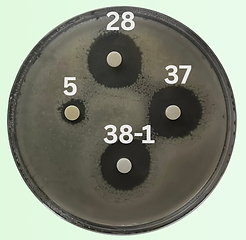
HIDDEN MICROBES WITH UNKNOWN POTENTIAL: A key component of this effort is the study of endophytic microorganisms—those living within plant tissues without causing harm—sourced from diverse and often understudied ecosystems such as marine seagrasses, bryophytes, and mangrove forests. These habitats harbor unique microbial communities shaped by extreme and fluctuating conditions, making them promising reservoirs of novel bioactive compounds.
BIOTECHNOLOGICAL APPLICATIONS: At the same time, we conduct experimental assays on microbial physiology, with a special interest in less explored groups such as protists, including members of Amoebozoa. By integrating classical culturing techniques with modern analytical tools, we aim to better understand their functional roles, metabolic capabilities, and potential applications in biotechnology. Through this integrative bioprospecting framework, Another major focus is the utilization of microbial enzymes—biocatalysts that drive a wide range of biochemical reactions. By isolating and characterizing enzymes from indigenous microbes, we explore their applications in bioremediation, agriculture, and industry, including the breakdown of pollutants, nutrient cycling, and enhancement of soil health. T
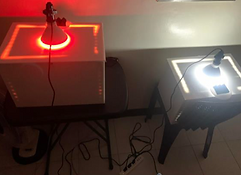
MICROPROPAGATION:Complementing microbial discovery, ICOLABB is engaged in the development of plant micropropagation and tissue culture systems. Through controlled in vitro techniques, we assess plant physiology, growth dynamics, and developmental responses, particularly in species of ecological and economic importance. In the context of agriculture, we examine how beneficial microbes can support plant growth and resilience, especially in economically important crops. This includes studying plant–microbe interactions such as nutrient solubilization, phytohormone production, and pathogen suppression. By integrating these microbes into plant growth systems, we aim to develop bioinoculants that enhance productivity while maintaining ecological balance.
ENVIRONMENTAL SURVEILLANCE: We also pursue environmental surveillance of microorganisms, including the detection of free-living amoebae such as Acanthamoeba in environmental samples. These organisms are not only ecologically important but also relevant to public health, making their monitoring essential in both natural and human-impacted environments. Additionally, ICOLABB explores the presence and ecological roles of endosymbiotic bacteria like Wolbachia.
CARE TO ExPERIENCE HOW COOL IT IS IN THE LAB: IWe remain open to collaborations across disciplines—whether in natural product discovery, microbial ecology, plant biotechnology, or applied conservation—welcoming ideas that bridge science, innovation, and real-world impact.


BIOMODELING
Learning the curve of computational biology
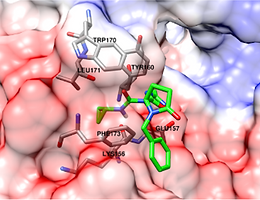


The ICOLABB Biomodelling Research Theme integrates ecological data, computational tools, and predictive analytics to better understand complex biological systems and inform decision-making across public health, agriculture, and environmental management. This work is structured into four interconnected subthemes:
MEDICAL IMPORTANCE: ICOLABB develops spatial and temporal models of disease epidemiology, with particular emphasis on neglected and emerging infections. This includes diseases classified under Neglected Tropical Diseases, as well as globally significant conditions such as Tuberculosis and infections caused by Non-tuberculous Mycobacterial Infections. By integrating environmental, climatic, and socio-demographic variables, we generate risk maps and predictive models that identify hotspots of transmission, potential outbreak zones, and shifting disease boundaries. These outputs are critical for targeted interventions, surveillance, and policy planning, especially in regions where disease burden remains underreported.
MATH DEPENDENCY: A core strength of ICOLABB lies in its development of biomathematical frameworks and computational pipelines designed to enhance predictive accuracy and interpretability. Using principles from Biomathematics, we construct algorithms for species distribution modeling, ecological niche prediction, and epidemiological forecasting. These models are particularly valuable in identifying environmental suitability zones, forecasting future outbreak risks, and supporting disaster risk management, where ecological disruption may trigger disease emergence. Importantly, our approaches are tailored for data-poor regions, leveraging sparse datasets through innovative modeling strategies to still produce meaningful, actionable insights.
MODELING MICROBIAL BIOMARKERS:
ICOLABB also focuses on the modeling of microbial metabolic and functional pathways, aiming to identify biomarkers and mechanisms relevant to plant health and disease control. By linking genomic and phenotypic data, we predict how microbial communities can be harnessed for biocontrol of plant pathogens, particularly in agriculturally important crops.. This work supports evidence-based agricultural management, providing tools for early detection of disease risk, optimizing microbial interventions, and informing policy decisions on crop protection and sustainable farming practices. Ultimately, it contributes to reducing crop losses and improving food security through science-driven solutions.
DEEP LEARNING IN HEALTH AND ECOLOGY: At the frontier of biomodelling, ICOLABB applies advanced machine learning techniques, including deep learning and Explainable Artificial Intelligence, to unravel complex biological patterns. These approaches are used in both communicable and non-communicable disease modeling, or using clinical images to predict disease might have on deck, enabling the detection of hidden relationships in large, multidimensional datasets.eyond health, these tools are applied to environmental niche modeling, predicting where species are most likely to thrive under changing conditions. The integration of explainable AI ensures that models remain transparent, interpretable, and policy-relevant, bridging the gap between computational sophistication . and real-world application.
Contact us
Laboratory 11, 4th Floor, Main Building, University of Santo Tomas, España Blvd, Sampaloc, Manila, 1008 Metro Manila
